Countertop-overhang-structural-deflection
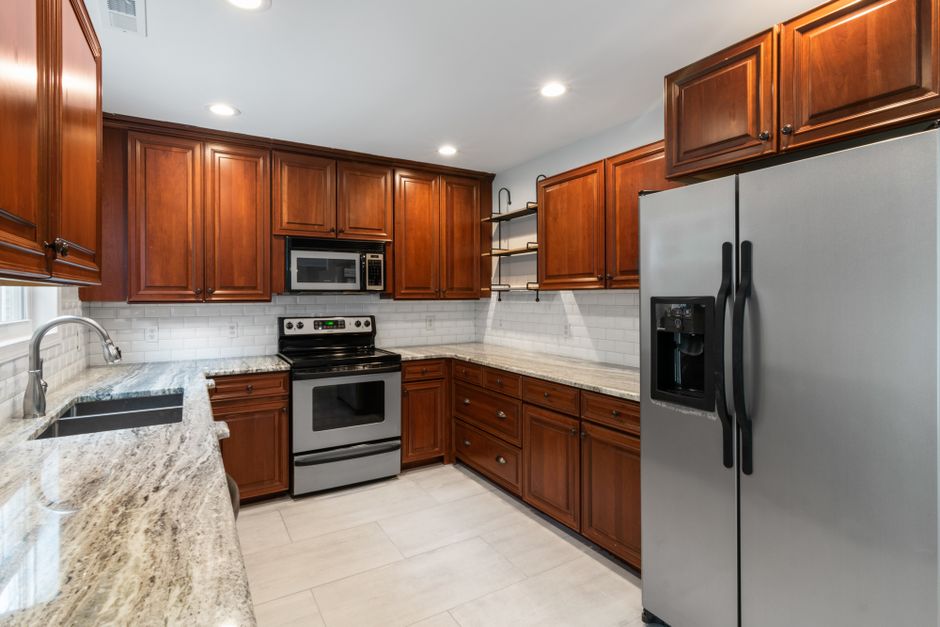
Once the heavy slab is lowered onto the cabinets, the deflection limits are established. The calculations that countertop installation rancho cucamonga backyard barter utilizes are more stringent than standard residential codes suggest for a granite work surface in Rancho Cucamonga, CA. Heavy stone requires precise support to prevent the edge from dipping under load.
Mechanical Deflection in Cantilevered Edges
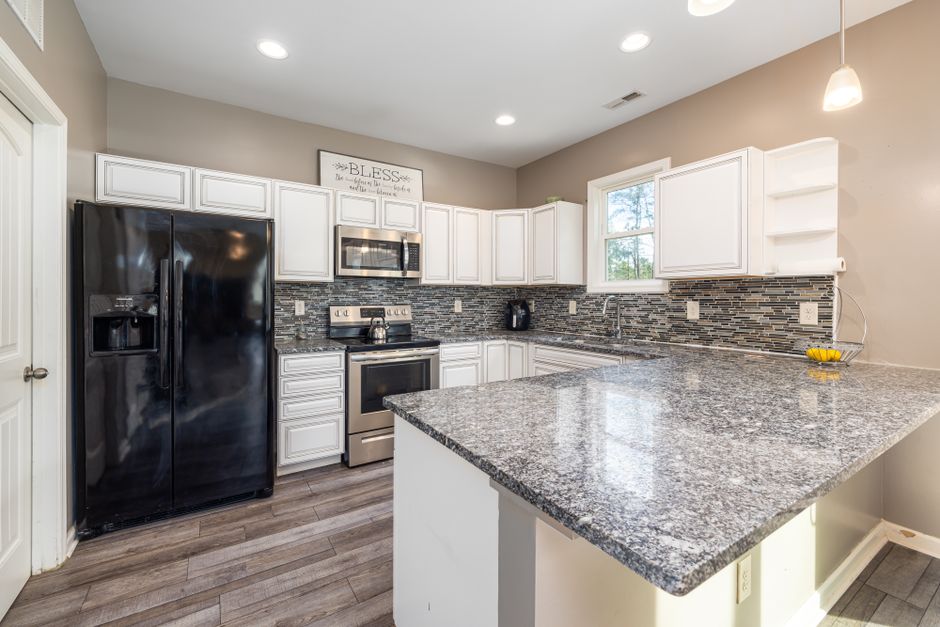
A cantilevered edge acts as a beam fixed at one end. The distance from the cabinet face to the outer edge determines the lever arm. For a quartz surface, weight applied at the extreme outer edge creates a downward moment. If the overhang exceeds twelve inches, the internal tension on the upper side of the slab increases. This tension can lead to structural failure or cracking at the seam if the support is insufficient. A heavy granite piece requires more rigidity than a lighter laminate alternative.
Calculating Vertical Movement
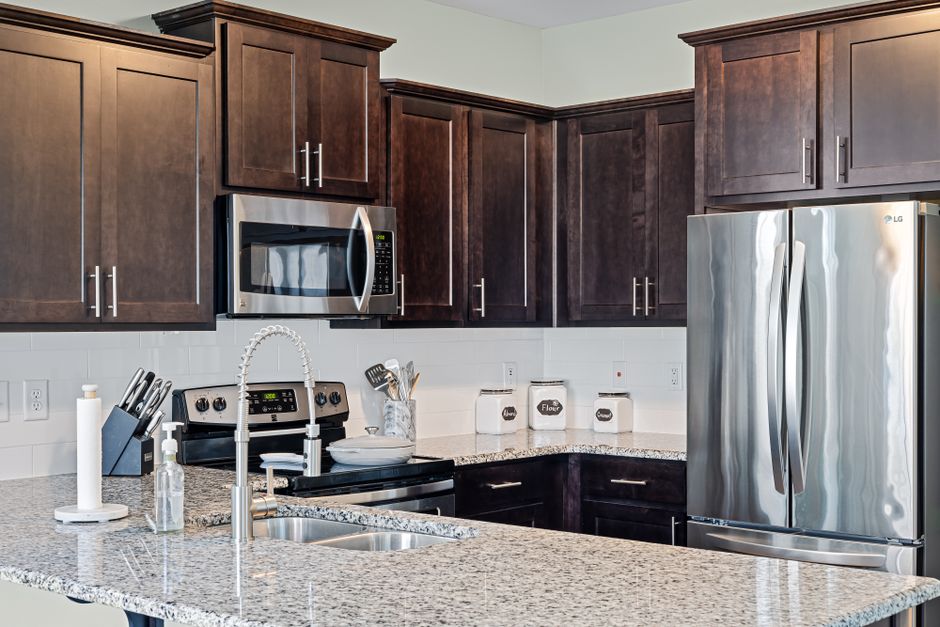
The formula for deflection involves the modulus of elasticity, the moment of inertia, and the length of the overhang. A thick slab has a higher moment of inertia, which resists bending. For example, a three centimeter quartzite piece will deflect less than a two centimeter marble piece under the same load. The weight of an undermount sink also adds constant downward pressure. This load must be factored into the total weight acting on the cantilevered section. A sink cutout reduces the overall structural integrity of the slab at that specific point.
Material Specificity and Support
Different materials respond to gravity in unique ways. A solid surface material is more flexible than a porcelain slab. If a butcher block overhang is utilized, the wood grain direction affects the stiffness. For stone, the thickness of the slab is the primary variable. A waterfall edge requires a continuous vertical plane to maintain stability. If the slab is a remnant, the dimensions might not allow for standard support brackets. Using steel corbels or hidden support rails prevents the edge from dipping when weight is applied.
Seam Placement and Structural Integrity
A seam placement near a sink cutout creates a weak point. Any movement at the edge travels through the material to the seam. If the deflection is too high, the epoxy bond at the seam will fail. This is particularly true for a marble slab which is more brittle than quartz. The template must account for the exact position of the cabinets to ensure the load is transferred directly to the framing. A digital template provides the precision needed to avoid misalignment during the final fit.